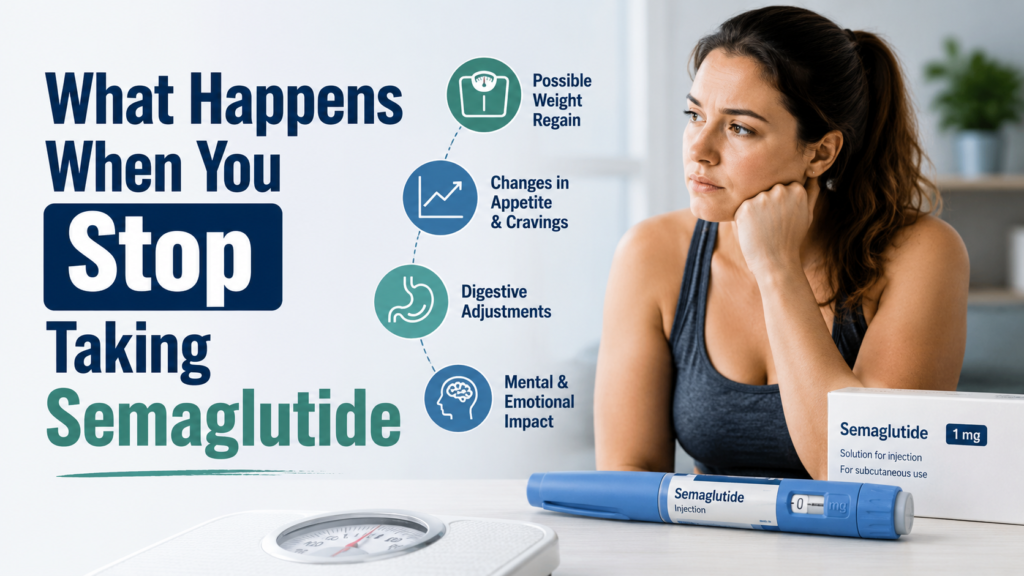
Understanding what happens when you stop taking semaglutide is important for anyone using this medication for weight loss or metabolic health. Semaglutide works by mimicking a natural hormone in the body called GLP-1, which helps control appetite, slow digestion, and improve feelings of fullness. While it is highly effective during treatment, the body reacts noticeably once the medication is stopped.
Many people notice changes in hunger levels, eating behavior, and even body weight within weeks of discontinuation. These changes are not random; they are biological responses as the body returns to its natural hormone balance. RoenRx provides medically supervised semaglutide treatments and ongoing weight management support, helping users understand these transitions more clearly so they can plan long-term success instead of short-term results.
In this guide, we will explore what happens when you stop taking semaglutide, why semaglutide weight regain can occur, and how to manage the transition in a healthy and realistic way.
How Semaglutide Works Before You Stop Taking It
Before understanding what happens when you stop taking semaglutide, it is important to understand how it works in the first place. Semaglutide acts like the GLP-1 hormone, which communicates with the brain to reduce hunger and increase satiety. This makes people feel full faster and reduces cravings, especially for high-calorie foods.
During treatment, many individuals experience a significant reduction in appetite without forcing themselves to diet strictly. This is one of the reasons semaglutide is widely used in structured medical programs. RoenRx provides access to semaglutide under clinical supervision, ensuring patients receive proper guidance while using the medication as part of a broader weight management plan.
Because the medication directly influences hunger hormones, stopping it leads to a reversal of these effects over time.
What Happens When You Stop Taking Semaglutide in the Body
When you stop taking semaglutide, the body gradually returns to its natural hormonal state. The first noticeable change is usually an increase in appetite. Hunger signals that were previously suppressed begin to reappear, and food may start to feel less satisfying after meals.
Digestion may also speed up slightly, meaning you may feel hungry sooner than you did while on the medication. Blood sugar control can become less stable for some individuals, especially those using semaglutide for metabolic conditions. These changes are normal and reflect the body adjusting back to its baseline state.
According to insights shared by RoenRx, these effects are not signs of failure but rather expected biological adjustments. The key is recognizing them early so that healthy routines can be maintained even after stopping treatment.
Semaglutide Weight Regain: Why It Happens
One of the most important topics around stopping the medication is semaglutide weight regain. This can happen because the appetite suppression effects of the drug are no longer active. As hunger returns, calorie intake often increases without people fully noticing it.
The body also has a natural tendency to regain weight after weight loss. When fat stores decrease, metabolism can slow slightly, and hunger hormones may increase to restore energy balance. This biological response is often referred to as metabolic adaptation.
RoenRx emphasizes that weight regain is not automatic or unavoidable. Instead, it depends heavily on lifestyle habits formed during treatment. Individuals who maintain structured eating patterns, balanced nutrition, and regular physical activity are more likely to sustain their results even after stopping semaglutide.
Timeline of Changes After Stopping Semaglutide
The timeline of what happens when you stop taking semaglutide varies from person to person, but general patterns are commonly observed. In the first week, appetite changes are usually mild. Some people may notice slightly increased hunger, while others feel little difference initially.
Between two to four weeks, hunger signals become more noticeable. Cravings may increase, portion sizes may grow, and the feeling of fullness after meals may reduce. This is often the stage where individuals need to be more mindful of their eating habits.
After one to three months, semaglutide weight regain becomes more likely if no lifestyle adjustments are in place. However, users who continue the habits they developed during treatment often maintain more stable weight outcomes. RoenRx highlights that consistency during this phase is more important than strict dieting.
Emotional and Behavioral Changes After Stopping
Beyond physical effects, stopping semaglutide can also influence eating behavior and emotional responses to food. Some individuals may find themselves thinking about food more frequently or experiencing stronger cravings for comfort foods.
This happens because the brain’s reward system is no longer receiving the same appetite-regulating signals. Emotional eating patterns may also reappear if they were previously controlled by reduced hunger levels during treatment.
RoenRx notes that awareness of these behavioral shifts is crucial. When individuals understand why these changes are happening, they are better equipped to manage them without frustration or confusion.
How to Manage What Happens When You Stop Taking Semaglutide
Managing what happens when you stop taking semaglutide requires a shift from medication-based control to lifestyle-based control. The goal is to build habits that naturally support appetite regulation and energy balance.
Balanced meals that include protein, fiber, and healthy fats help maintain fullness and reduce cravings. Regular physical activity supports metabolism and improves insulin sensitivity. Sleep quality also plays a major role, as poor sleep can increase hunger hormones and make weight management more difficult.
RoenRx encourages individuals to focus on sustainable routines rather than restrictive diets. Small, consistent changes are more effective in the long run than extreme short-term efforts.
Role of RoenRx in Semaglutide-Based Care
RoenRx plays an important role in helping individuals access semaglutide under medical supervision and understand how to use it effectively within a structured program. The platform focuses on personalized care, where providers evaluate health needs and prescribe treatment when appropriate.
More importantly, RoenRx supports users beyond just medication access. It helps individuals understand what happens when they stop taking semaglutide and how to prepare for long-term weight management. This includes education around appetite changes, behavioral habits, and lifestyle adjustments.
By offering continuous guidance, RoenRx ensures that users are not left without support once they transition off medication.
Long-Term Outlook After Stopping Semaglutide
Long-term success after stopping semaglutide depends on how well lifestyle habits are maintained. The medication provides strong support during treatment, but lasting results are achieved through consistent behavior changes.
Individuals who focus on mindful eating, portion awareness, and regular movement are more likely to maintain their progress. Understanding semaglutide weight regain as a manageable risk rather than an inevitable outcome helps set realistic expectations.
RoenRx emphasizes that long-term health is not defined by medication alone but by sustainable habits built during and after treatment.
Conclusion
Stopping semaglutide leads to natural biological changes, including increased appetite, reduced fullness, and potential weight regain. These effects occur because the body is returning to its normal hormonal balance after medication support is removed.
However, semaglutide weight regain is not guaranteed. With proper lifestyle habits, awareness, and structured support, many individuals maintain their progress successfully. RoenRx helps guide users through both treatment and post-treatment phases, ensuring they understand what happens when they stop taking semaglutide and how to manage it effectively.
Ultimately, long-term success depends on consistency, education, and sustainable daily habits rather than medication alone.
FAQs
1. What happens when you stop taking semaglutide suddenly?
Appetite gradually increases as hormone levels return to normal, and hunger signals become more noticeable.
2. Will I always regain weight after stopping semaglutide?
No, weight regain depends on lifestyle habits, not just medication history.
3. How quickly does appetite return after stopping semaglutide?
Most people notice changes within a few days to a few weeks.
4. Can lifestyle changes prevent semaglutide weight regain?
Yes, balanced nutrition, exercise, and sleep can significantly reduce the risk.
5. Does RoenRx help after stopping semaglutide?
Yes, RoenRx provides ongoing guidance to help users manage long-term weight stability after treatment.