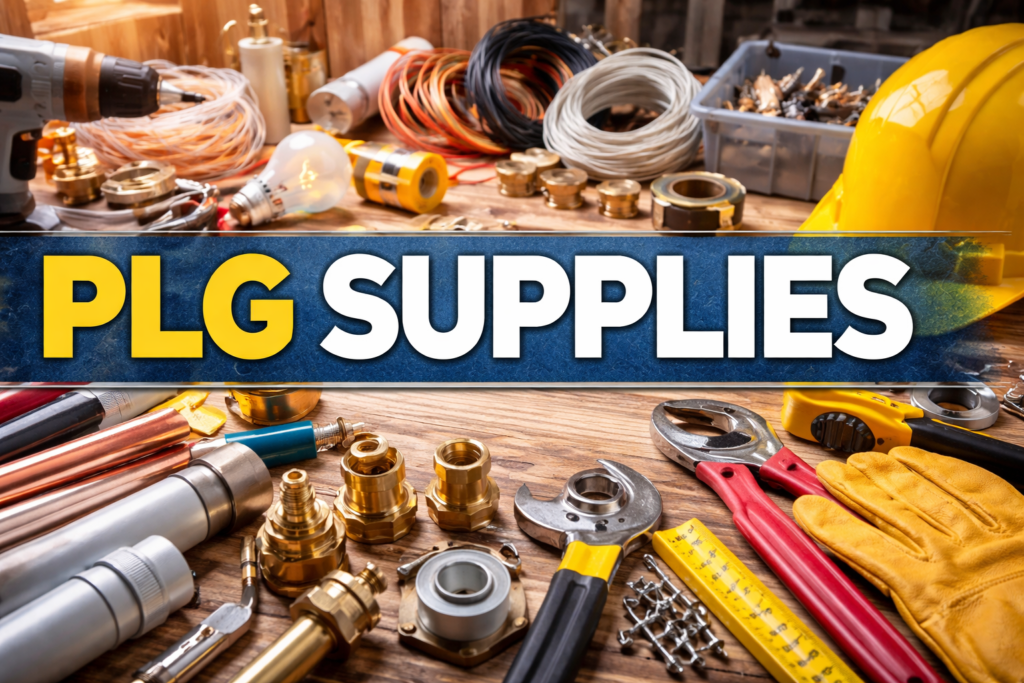
You don’t really notice PLG supplies most of the time… and that’s kind of the point.
They’re not the “main attraction” in any project. Nobody really walks into a building and says, “wow, look at those pipe fittings!” or gets excited about screws and wires. But if you remove them? Everything stops. Simple as that.
PLG supplies sit in that weird space between invisible and essential. Always there, always used, rarely appreciated.
And once you start looking closely, you realize—this category is bigger than it sounds.
So what actually are PLG supplies?
PLG usually refers to Plumbing, Lighting, and General supplies.
That’s the basic idea… though in real life, people sometimes stretch the meaning depending on the shop or industry.
But generally, it includes:
- plumbing materials like pipes and valves
- lighting items like bulbs and fixtures
- general hardware tools and fittings
Nothing fancy. Just the everyday working parts that keep buildings, machines, and systems alive.
Honestly, if construction work had a “support cast,” this would be it.
Why people rely on PLG supplies so much
Here’s the thing. Every project—big or small—hits a point where progress depends on tiny items.
A missing connector. A broken fitting. A single wire.
And suddenly everything is paused.
That’s why PLG supplies matter more than people think.
They help with:
- keeping systems running smoothly
- avoiding delays in construction or repair work
- fixing issues quickly without rebuilding everything
- maintaining safety in electrical and plumbing setups
- supporting daily maintenance work
It’s not glamorous. But it saves time, money, and a lot of frustration.
Main categories of PLG supplies (simple breakdown)
Instead of making it sound complicated, let’s just split it the way most workers actually see it.
1. Plumbing side of things
This is probably the most familiar one.
You’re dealing with water flow, drainage, connections… all that.
Typical items include:
- PVC and metal pipes
- elbows, joints, connectors
- taps, valves, and fittings
- sealing tape, adhesives
It’s basically everything that moves water from point A to B without leaking all over the place.
2. Lighting supplies
Lighting is not just “bulbs in a holder.”
It’s safety, visibility, and sometimes even productivity.
You’ll usually find:
- LED bulbs and tube lights
- lamp holders and switches
- wiring accessories
- emergency lighting setups
And yes, even small lighting parts matter a lot more than people realize. One faulty switch can mess up an entire setup.
3. General hardware supplies
This is the big mixed bag.
The “everything else” category.
- screws, nails, bolts
- hammers, spanners, pliers
- adhesives and tapes
- gloves, helmets, safety glasses
It doesn’t look like much when it’s lying on a table… but in use, it becomes the backbone of every repair job.
Quick table for a clearer picture
Sometimes it’s easier when it’s all in one place:
| Category | What it includes | Where it’s used |
|---|---|---|
| Plumbing | Pipes, valves, fittings | Water systems, buildings |
| Lighting | Bulbs, fixtures, wiring | Homes, offices, sites |
| General | Tools, screws, safety gear | Repairs, construction |
Simple enough, right?
Where PLG supplies are actually used
You’ll be surprised how often these things show up in daily life.
Construction sites
Walls, ceilings, floors—everything depends on these small parts being correctly installed.
Homes
Even basic repairs like fixing a tap or changing a bulb use PLG items.
Factories and industries
Machines need constant maintenance. That means fittings, tools, replacements… all the time.
Shops and warehouses
Lighting systems, storage setups, electrical connections—again, PLG supplies everywhere.
It’s one of those categories that quietly spreads into every corner.
A small reality check
People often think “supplies” means just buying stuff off a shelf.
But in practice… it’s more like constant problem-solving.
A technician doesn’t just buy a pipe. They buy the exact pipe that fits pressure, size, and material requirements.
Same with electrical parts. Same with tools.
So yeah, it’s not random shopping. It’s specific, practical, and sometimes a bit frustrating when the exact piece isn’t available.
Materials used in PLG supplies
Different materials behave differently, and that matters a lot.
- PVC – cheap, lightweight, widely used for water systems
- Copper – strong and reliable, often used in plumbing and wiring
- Brass – durable and corrosion-resistant
- Steel – heavy-duty strength for industrial work
- Rubber/silicone – flexible sealing and insulation
Each one has its place. And mixing them wrong? That’s where problems start.
Common challenges people face
Working with PLG supplies isn’t always smooth.
Some common issues include:
- delays in getting the right part
- quality differences between suppliers
- mismatched sizes or standards
- rising material costs
- storage and inventory confusion
And sometimes it’s not even technical—it’s just availability. One missing part can stop an entire job.
That’s why experienced workers always keep backup options.
Why this industry keeps growing
Even though it sounds basic, PLG supply demand never really slows down.
Why?
Because:
- buildings keep getting constructed
- old systems need repairs
- infrastructure keeps expanding
- maintenance never stops
It’s a cycle. Build, fix, upgrade… repeat.
And PLG supplies sit right in the middle of that cycle.
Final thoughts
PLG supplies might not be exciting at first glance. They don’t get attention. They don’t look impressive.
But they’re always there.
In homes, in factories, in construction sites… quietly doing their job so everything else can function properly.
And maybe that’s the best way to describe them:
They’re the small things that hold the big things together.
Want to read more like this? Check out afruimwagens for more interesting articles.