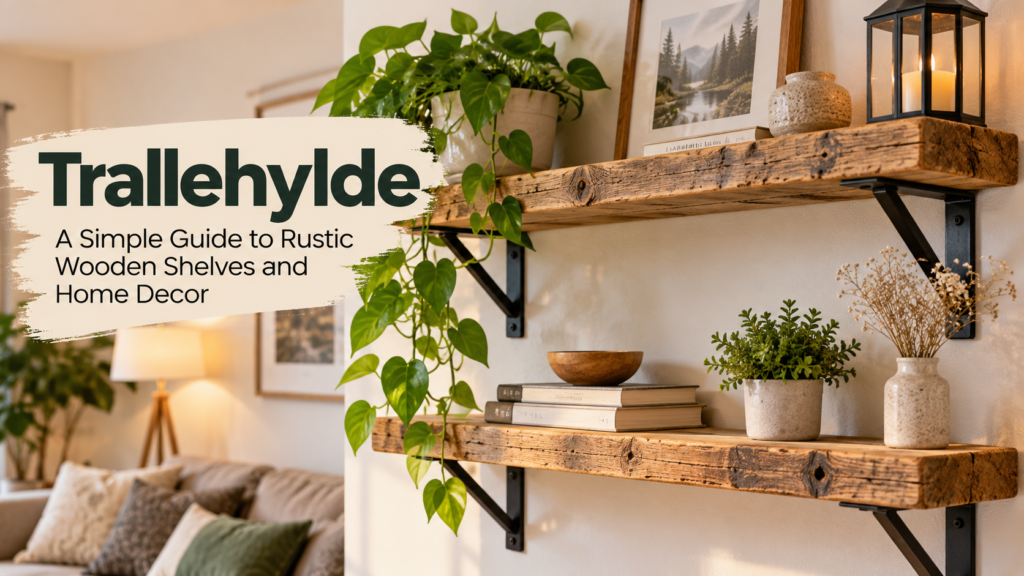
A well-chosen shelf can do more than provide extra storage. It can make an empty wall feel complete, display the things you love, and bring a little warmth into a room. That is part of the appeal of a trallehylde, a Danish term associated with rustic wooden shelving made from, or inspired by, traditional wooden slatted platforms.
If you enjoy natural materials, simple furniture, and interiors that feel comfortable rather than overly polished, this shelving style is worth exploring. It can work in a living room, kitchen, bedroom, or even a small hallway.
But what exactly makes a trallehylde different from an ordinary wooden shelf? And how do you choose one that looks good while remaining practical? Let’s take a closer look.
What Is a Trallehylde?
The word trallehylde comes from Danish. The word hylde means shelf, while tralle refers to a narrow, slatted wooden structure traditionally associated with scaffolding platforms.
According to Den Danske Ordbog, a tralle is a long, narrow platform made from connected wooden battens. Although these structures were originally designed for practical purposes, similar timber has also been reused to create furniture and decorative items.
In home design, a trallehylde generally refers to a wooden shelf with a rustic, natural, or slatted appearance. Some versions use reclaimed timber, while others are made from new wood designed to achieve a similar look.
The finish can vary quite a bit. One shelf might have visible knots and darker marks, while another may be carefully sanded and coated to create a cleaner appearance.
There is no single standard design for every trallehylde. Its dimensions, material, construction, and weight capacity depend on the particular product.
Why Is Trallehylde Popular in Home Decor?
One reason people like this style is its simplicity. It doesn’t need elaborate decoration or complicated shapes to attract attention. The natural appearance of wood often does enough.
A trallehylde can also create an interesting contrast with modern interiors. Imagine a white wall, a simple sofa, and a wooden shelf displaying a few books and small plants. The arrangement feels relaxed without looking unfinished.
Here are some reasons homeowners may choose this type of shelving:
- Natural appearance: Wood adds warmth and texture to a room.
- Practical storage: A shelf provides space for everyday objects without requiring a large cabinet.
- Versatile styling: Rustic timber can complement Scandinavian, industrial, farmhouse, and contemporary interiors.
- Individual character: Reclaimed wood may have distinctive grain patterns, knots, and signs of previous use.
- Potential for reuse: Shelves made from suitable reclaimed timber give existing materials another purpose.
- Decorative value: Even a simple shelf can become a feature when arranged thoughtfully.
And there is another advantage: you don’t need to fill every inch of it. A few carefully chosen objects can look better than a shelf packed with decorations.
Different Types of Trallehylde
Not every wooden shelf has the same construction or appearance. Understanding the main options makes choosing one much easier.
1. Rustic Reclaimed Wood Shelves
These shelves use previously used timber or wood with a deliberately aged appearance. The surface may show natural variations in colour, knots, and texture.
They work particularly well in homes with exposed brick, neutral walls, vintage accessories, or wooden furniture.
Before buying, check that reclaimed timber has been properly cleaned, inspected, and prepared for indoor use.
2. Slatted Wooden Shelves
Slatted designs use multiple narrow wooden pieces rather than one completely solid surface. This creates an open, textured appearance that can feel lighter than a thick wooden board.
However, the gaps matter. Very small objects may slip through, so consider what you intend to display.
3. Modern Wooden Shelves
Some trallehylde-inspired products have a smoother finish and more controlled dimensions. They retain the natural look of wood but suit rooms where a rough, industrial appearance might feel out of place.
These can be a good option for bedrooms, home offices, and modern apartments.
4. Shelves With Metal Brackets
Wood and metal make a practical combination. Black metal brackets, for example, can complement darker timber and create an industrial-inspired appearance.
The brackets also need to be suitable for the shelf’s intended load and the wall on which it will be mounted.
Trallehylde Styles Compared
The following table offers a simple comparison of common shelving styles. These are general design categories, not fixed product specifications.
| Shelf style | Appearance | Best suited for | Main consideration |
|---|---|---|---|
| Reclaimed wood | Aged, textured, rustic | Living rooms and hallways | Inspect timber condition |
| Slatted wood | Open and distinctive | Modern and Scandinavian interiors | Check the gaps between slats |
| Smooth wood | Clean and understated | Bedrooms and offices | Choose a suitable finish |
| Wood with metal brackets | Industrial and sturdy-looking | Kitchens and workspaces | Check bracket and wall capacity |
| Painted wood | Colourful or minimalist | Children’s rooms and contemporary homes | Use an appropriate paint finish |
The best option depends on your room, your budget, and the objects you want to store. There is no need to choose the most expensive design if a simpler shelf meets your needs.
Where Can You Use a Trallehylde?
One of the useful things about wooden shelving is that it can fit into different rooms with a few small adjustments.
Living Room
In a living room, a trallehylde can display framed photographs, small plants, ornaments, or a few favourite books. It can also help fill an empty wall without introducing another large piece of furniture.
Try leaving some open space between objects. This makes the arrangement feel more natural.
Kitchen
A wooden shelf can hold spice jars, lightweight containers, mugs, or selected cooking accessories. It may also work as a small coffee station when installed above a counter.
Kitchen conditions deserve extra attention, though. Steam, grease, and occasional splashes can affect an unsuitable wood finish. Choose a surface treatment appropriate for the environment and clean spills promptly.
Bedroom
In a bedroom, a trallehylde can provide space for a small plant, decorative objects, or other lightweight belongings. A carefully positioned shelf may also serve as an alternative to a small bedside table.
Avoid placing heavy or fragile objects directly above a bed.
Hallway
Hallways often have limited floor space. A wall-mounted shelf can make use of otherwise empty wall space while keeping the walkway clear.
You might use it for a small decorative bowl, framed artwork, or a few everyday items. If you want to store keys or bags, make sure the design and mounting hardware are appropriate for that purpose.
Home Office
A wooden shelf can keep reference books, stationery, and small accessories within reach. It may also provide a place for a plant or personal decoration, helping the workspace feel less plain.
Just avoid overloading it with heavy books unless the shelf and its fixings are rated for the combined weight.
How to Choose the Right Trallehylde
Looks matter, of course, but a shelf also needs to work in your everyday space.
Before making a purchase, consider these practical points:
- Measure the available wall space. Check the width, depth, and height before ordering.
- Think about the intended use. Decorative items and heavy books place different demands on a shelf.
- Check the material. Look for damaged timber, loose joints, splinters, or signs of moisture damage.
- Inspect the finish. Smooth, properly prepared surfaces are generally easier to clean and handle.
- Choose suitable brackets. The mounting system must match the shelf design, expected load, and wall construction.
- Consider maintenance. Some finishes need occasional attention, while others are designed for easier routine cleaning.
- Compare the full cost. Include brackets, fasteners, finishing products, and installation if they are not supplied.
And don’t judge a shelf by its product photograph alone. Ask about the actual dimensions and load rating, particularly if you plan to store anything heavy.
How to Style a Trallehylde
You don’t need professional interior design skills to make a wooden shelf look attractive. A few simple choices can make a noticeable difference.
Start with two or three different types of objects. For example, combine a small plant, a book, and a ceramic ornament. The different shapes create interest without making the shelf feel crowded.
You can also try these ideas:
- Combine light-coloured wood with white or beige walls.
- Use darker timber to create contrast against a pale background.
- Group small objects together instead of spreading them evenly across the shelf.
- Add a trailing plant where appropriate, keeping leaves away from anything that could be damaged.
- Mix practical objects with a few personal decorations.
- Leave some empty space so the wood itself remains visible.
The key is to make the arrangement feel natural. A shelf doesn’t have to look perfectly symmetrical to look good.
Can You Make a Trallehylde Yourself?
Yes, a DIY version is possible if you have suitable woodworking skills and materials. A simple project may involve a prepared wooden board or slatted timber, compatible brackets, appropriate fasteners, and a finish suited to the intended location.
Reclaimed wood can be an appealing choice, but don’t assume every old plank is safe for indoor furniture. Inspect it for cracks, loose nails, contamination, and damage. Timber previously used in construction should be assessed carefully before reuse.
For a basic project, follow these steps:
- Measure the intended location.
- Choose sound timber of a suitable size.
- Clean and sand the wood as appropriate.
- Apply a compatible finish if needed.
- Select mounting hardware suitable for the wall and expected load.
- Install the shelf securely and check that it sits level.
- Test its stability before placing everyday items on it.
If you are unsure about the wall construction or installation method, seek help from someone experienced with mounting shelves. Proper installation is just as important as the wood itself.
Maintaining Your Trallehylde
A little routine care can help keep a wooden shelf looking good.
Dust it regularly with a soft cloth, and clean spills before they soak into the timber. Avoid soaking the surface with water or using harsh cleaners that could damage its finish.
It’s also worth checking the brackets and fixings from time to time, especially if the shelf carries books or other heavy items.
For reclaimed timber, follow the care instructions provided by the seller. Oil, lacquer, paint, and other finishes have different maintenance requirements, so one treatment will not suit every shelf.
Is Trallehylde a Sustainable Choice?
It can be, particularly when a shelf is made from reclaimed timber that would otherwise go unused. Reusing suitable wood may reduce the need for newly sourced material and give old timber a useful second life.
Still, sustainability depends on the complete product. Its source, processing, finishing materials, durability, and transportation can all make a difference.
If environmental impact matters to you, ask the seller whether the wood is reclaimed, how it has been treated, and whether its origin can be verified. A product described as rustic is not automatically recycled or environmentally friendly.
Final Thoughts
A trallehylde offers a straightforward way to combine storage with the natural character of wood. Its appeal comes from simple construction, visible texture, and the flexibility to suit different rooms and decorating styles.
Whether you prefer rough reclaimed timber or a smoother modern finish, the right shelf should fit your space, hold your belongings safely, and be easy enough to maintain.
Take time to check the material, dimensions, finish, and mounting system before choosing one. After that, styling can stay simple — a few books, a plant, or a favourite decorative object may be all it needs.
Sometimes, the most useful addition to a room is also one of the simplest.