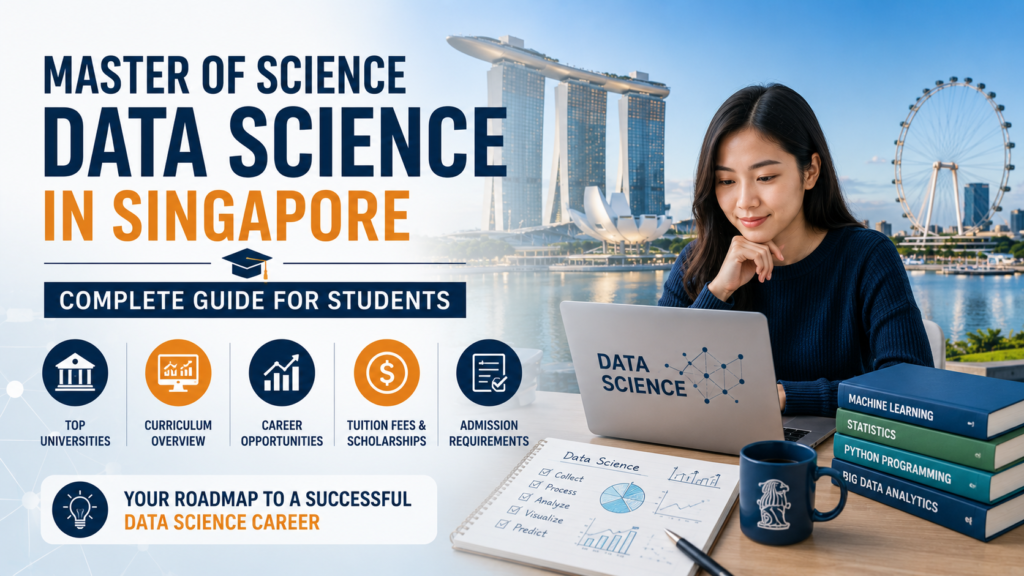
Choosing a Master of Science Data Science programme is one of the smartest decisions for students and working professionals who want to build advanced analytical, programming, and artificial intelligence skills. Singapore has become one of Asia’s leading technology and innovation hubs, making it an excellent destination for postgraduate education. A Master of Science Data Science programme helps students learn how to collect, analyse, interpret, and manage large volumes of data while solving real-world business challenges.
Today’s organisations rely heavily on data-driven decisions. Industries such as banking, healthcare, e-commerce, logistics, manufacturing, telecommunications, and government agencies are actively seeking professionals with specialised data science knowledge. Completing a Master of Science Data Science qualification can improve career prospects while preparing graduates for future technology-driven roles.
Why Choose Master of Science Data Science?
A Master of Science Data Science programme combines mathematics, statistics, computer science, and business intelligence into one specialised postgraduate qualification. Students learn how organisations use data to improve efficiency, predict trends, reduce costs, and make informed decisions.
Singapore’s technology ecosystem provides an ideal learning environment where innovation, artificial intelligence, and digital transformation continue to grow rapidly.
Some major advantages include:
- Industry-focused curriculum
- Practical learning experience
- High demand for data professionals
- Strong career growth
- Internationally recognised qualification
These benefits make Master of Science Data Science an attractive option for students planning long-term careers in technology and analytics.
Develop Industry-Ready Skills
Students gain practical experience with programming, machine learning, artificial intelligence, and business analytics that employers value across multiple industries.
Learn Through Real-World Projects
Many Master of Science Data Science programmes include case studies, practical assignments, research projects, and industry-focused learning that strengthen analytical thinking.
What You Will Learn
The curriculum is designed to provide both technical knowledge and practical problem-solving skills.
| Core Subject | Skills Developed |
| Data Analytics | Data interpretation and reporting |
| Machine Learning | Predictive modelling |
| Artificial Intelligence | Intelligent systems |
| Statistics | Data analysis |
| Programming | Python, R, SQL |
| Big Data Technologies | Large-scale data processing |
| Data Visualisation | Dashboard creation |
| Database Management | Data storage and organisation |
Students also complete projects that allow them to apply classroom knowledge to practical business situations.
Machine Learning
Machine learning enables organisations to identify patterns, automate tasks, and improve decision-making through intelligent algorithms.
Data Visualisation
Presenting complex information through charts and dashboards helps businesses understand trends more effectively.
Admission Requirements
Admission requirements vary depending on the programme, but most applicants should prepare the following documents.
Typical requirements include:
- Bachelor’s degree from a recognised institution
- Academic transcripts
- Resume or CV
- Statement of purpose
- English language proficiency (where required)
- Letters of recommendation
- Identification documents
Some Master of Science Data Science programmes may also consider relevant work experience during the admission process.
Study Options
Students can choose the learning format that matches their career goals.
| Study Mode | Suitable For |
| Full-Time | Recent graduates |
| Part-Time | Working professionals |
| Hybrid Learning | Flexible schedules |
| Research-Based | Academic careers |
Flexible study options allow students to balance education with professional commitments.
Tuition Fees and Duration
The overall cost of a Master of Science Data Science programme depends on several factors, including study mode and programme structure.
| Expense | Estimated Cost (SGD) |
| Tuition Fees | $20,000–$60,000+ |
| Study Materials | $500–$2,000 |
| Miscellaneous Fees | $500–$2,500 |
Most programmes can be completed within 12 to 24 months, while part-time study may take longer.
Career Opportunities
Graduates of Master of Science Data Science programmes can pursue careers across numerous industries.
Popular job roles include:
- Data Scientist
- Machine Learning Engineer
- Data Analyst
- AI Specialist
- Data Engineer
- Business Intelligence Analyst
- Analytics Consultant
- Quantitative Analyst
As organisations continue investing in digital transformation, demand for qualified data professionals is expected to remain strong.
Industries Hiring Data Science Professionals
Graduates find opportunities in:
- Banking
- Healthcare
- Retail
- Logistics
- Government
- Technology
- Manufacturing
- Telecommunications
Skills You Will Develop
A Master of Science Data Science programme helps students build technical and professional capabilities.
These include:
- Statistical analysis
- Machine learning
- Programming
- Data modelling
- Data visualisation
- Critical thinking
- Business intelligence
- Problem-solving
These skills support long-term career growth across multiple sectors.
Common Mistakes Students Should Avoid
Planning ahead helps students maximise the value of their postgraduate studies.
Common mistakes include:
- Applying without reviewing admission requirements
- Ignoring scholarship opportunities
- Choosing a programme without career planning
- Underestimating study workload
- Focusing only on theory instead of practical skills
- Missing application deadlines
Avoiding these mistakes improves both academic success and future career prospects.
Final Takeaway
A Master of Science Data Science qualification provides advanced technical knowledge, practical analytical skills, and strong career opportunities in today’s data-driven economy. As industries increasingly rely on artificial intelligence and data analytics, graduates with a Master of Science Data Science qualification are well-positioned for long-term professional success.
Before applying, compare programme structures, admission requirements, study options, tuition fees, and career outcomes to find the best fit for your academic and professional goals.
1. What is Master of Science Data Science?
Master of Science Data Science is a postgraduate programme that focuses on data analytics, machine learning, artificial intelligence, statistics, programming, and business intelligence.
2. How long does Master of Science Data Science take?
Most Master of Science Data Science programmes take between 12 and 24 months, while part-time options may take up to 36 months.
3. Who should study Master of Science Data Science?
The programme is suitable for graduates and professionals interested in data analytics, artificial intelligence, technology, engineering, mathematics, finance, and business intelligence.
4. What careers are available after completing Master of Science Data Science?
Graduates can work as Data Scientists, Machine Learning Engineers, Data Analysts, AI Specialists, Business Intelligence Analysts, Data Engineers, and Analytics Consultants.